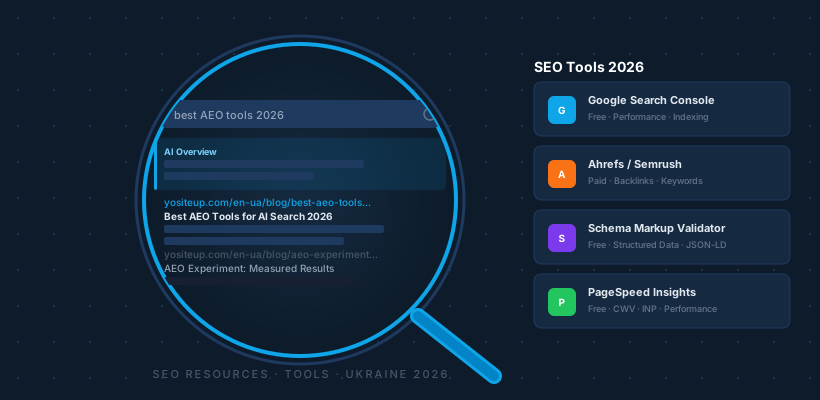
Having the right resources at hand makes SEO work more efficient and effective. Here's a curated set of practical materials for SEO professionals working in 2026's AI-transformed search landscape.
Google Ads Data Retention: What Changed in June 2026
The data retention policy changes and how they affect historical analysis, remarketing audiences, and reporting workflows — in Google Ads data retention policy June 2026.
Site Technical Support and Long-Term SEO
How ongoing technical maintenance affects long-term search performance — practical insights in site technical support and SEO.
SEO Marketing Premium Case
A real case study showing what premium SEO marketing looks like in practice — with data and methodology — in SEO marketing premium case study.
SEO Marketing Work Report Example
What a transparent, well-structured SEO marketing work report looks like — in SEO marketing work report.
Content Optimization Services
A practical overview of content optimization services and what they include — in content optimization for SEO.
Building an SEO resource library for 2026
Effective SEO in 2026 requires staying current with a rapidly changing landscape while maintaining focus on fundamentals. A practical resource library for SEO professionals should include reliable tracking of Google's algorithm announcements and quality guidelines, research on AI search behavior and user response to AI Overviews, tools for technical auditing and performance monitoring, and case studies from sites successfully navigating the AI search transition. The challenge is filtering signal from noise: many SEO blogs generate high volumes of content about every minor change, while few consistently provide insight that leads to actionable strategy changes.
The economics of SEO in 2026
The return on investment calculation for SEO has changed with the shift to AI-driven search. Higher-quality work is required to achieve the same results, which means the cost of effective SEO has increased. But the value of organic traffic — when it converts — has also increased, because users who reach a site through organic search in the AI era are more likely to have complex needs that require human assistance or expertise. The net effect for most businesses: SEO requires more investment but produces higher-value customers, making the ROI calculation favorable for businesses with sufficient patience for the longer feedback loops.
The compounding value of consistent SEO investment
One underappreciated aspect of SEO economics is how results compound over time when investment is consistent. A page published today that earns AI Overview citations builds precedent that makes future pages on related topics more likely to be included. A site that demonstrates consistent factual accuracy builds trust signals that extend to new content automatically. An author who publishes expert content regularly becomes more valuable as a citation source with each additional piece. This compounding dynamic means that stopping and starting SEO investment wastes the compounding potential of previous work, while consistent investment accelerates returns over time rather than producing linear growth.
Building a sustainable SEO knowledge base means being selective about sources. The SEO industry has a high ratio of content that rehashes existing information to content that provides genuine new insight. Prioritize Google official documentation and announcements, independent research from credible sources with clear methodology, and practitioner accounts with specific data. Treat aggregations and opinion pieces as starting points for further research rather than authoritative sources. The goal is building genuine understanding of how search works, not just collecting tactical checklists.