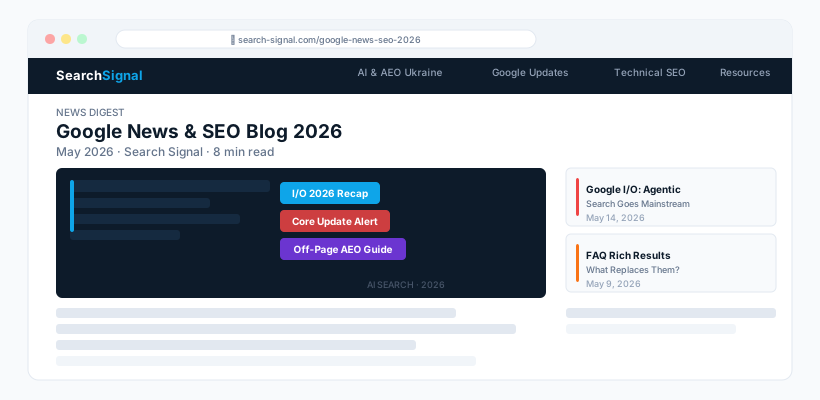
Keeping up with Google's 2026 changes requires filtering signal from noise. Here's a curated digest of the most consequential updates and what they mean for SEO practice across markets.
Google I/O 2026: Agentic Search Goes Mainstream
Google I/O confirmed the shift from retrieval-based to agentic search. A thorough breakdown — in Google I/O 2026: AI agents, search and Intelligent Search Box SEO.
Google Information Agents Explained
How Google's specialized information agents work and what content they prefer — in Google information agents, search and SEO 2026.
Google Marketing Live 2026: Ad Landscape Changes
The new AI ad formats announced and their impact on the search ecosystem — in Google Marketing Live 2026: AI ad formats.
FAQ Rich Results: What to Do After Removal
Google's removal of FAQ Schema from rich results and what to replace it with — in Google removed FAQ rich results May 2026: what to do.
Off-Page SEO in the AI Era
How external signals and brand mentions need to evolve for AI-influenced search — in off-page SEO for AI visibility in 2026.
The interconnected nature of 2026's major Google changes
Google's 2026 updates aren't isolated changes — they're part of a coherent direction. The removal of FAQ Rich Results reduces the advantage that structured markup gave to thin content. The Core Update penalizes content that doesn't demonstrate genuine expertise. The expansion of AI Overviews reduces clicks to pages that only provide information without action. Taken together, these changes consistently push toward the same goal: ensuring that the websites users visit through Google deliver genuine value that AI alone can't provide.
Content that AI can't replace: the new competitive moat
Understanding what AI search can and can't do well defines where human-created content still has unique value. AI systems excel at synthesizing and summarizing existing information, answering factual questions, and providing structured step-by-step guidance on well-documented processes. They struggle with original opinion and analysis backed by unique perspective, first-hand experience and case studies, cutting-edge information that wasn't in their training data, and nuanced judgment calls that require understanding a specific context. Building content strategy around these strengths is the most durable path to maintaining SEO value as AI search continues to evolve.
The 2026 search landscape: what changed and what didn't
It's easy to overestimate how much has changed and underestimate what remains constant. What changed significantly in 2026: the share of informational queries answered directly by AI without a click has grown substantially; the technical bar for content to be included in AI Overviews is meaningfully higher than for traditional ranking; Google's ability to detect AI-generated content without genuine expertise behind it has improved considerably. What hasn't changed: high-quality, genuinely useful content still earns ranking and AI citation; technical quality still matters and still creates measurable ranking advantages; building real authority through citable, original content still compounds over time in ways that can't be shortcut.